Vendor Management System: Reduce Hiring Costs and Improve Compliance
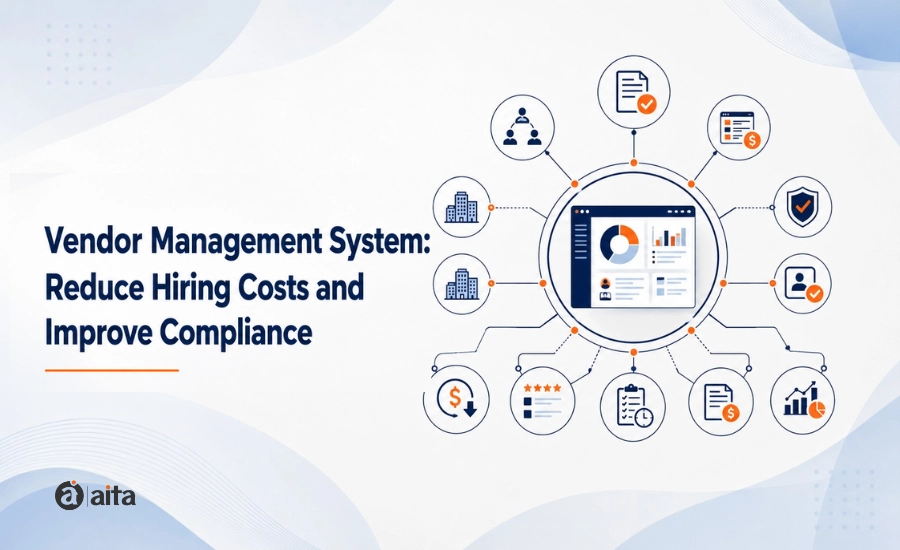
A vendor management system sounds like back-office plumbing until the month you’re staring at a contingent workforce spend report that doesn’t match what any single department manager remembers approving. That gap between what was requested and what actually got paid out is exactly the problem a well-run VMS is built to close. For companies juggling multiple staffing suppliers, project-based hires, and shifting compliance rules across states or countries, the system isn’t a nice-to-have anymore. It’s the difference between knowing your contingent labor costs and guessing at them.
We’ve sat across the table from procurement leaders and HR directors who inherited a vendor management system nobody fully understood, and we’ve helped others build a contingent labor management strategy from a blank spreadsheet. The pattern repeats: organizations that treat their VMS as a strategic tool consistently outperform those that treat it as a compliance checkbox.
What a Vendor Management System Actually Does
At its core, a VMS is software that centralizes how a company requests, tracks, approves, and pays contingent workers contractors, temps, freelancers, and staffing agency placements across every supplier it works with. Instead of a hiring manager emailing three different agencies and hoping for the best rate, requisitions flow through one platform where suppliers compete, rates are bench-marked, and every transaction leaves an audit trail.
That sounds simple. In practice, most mid-size and large companies work with somewhere between five and thirty staffing vendors at once, often without realizing it until someone runs a spend audit. Marketing might have a relationship with one recruiting firm, IT has three others, and the warehouse team is using a local agency nobody in procurement has ever heard of. A vendor management system pulls all of that into a single view, which is the first real step toward controlling cost rather than reacting to invoices after the fact.
The Core Functions Worth Knowing
A functioning VMS platform typically handles:
Requisition creation and approval routing, so open roles get posted to the right suppliers automatically
Rate card management, comparing bill rates across vendors for the same role and location
Time and expense capture, often integrated directly with payroll or an MSP’s back-office system
Supplier scorecards, tracking the fill rate, time-to-submit, and quality of candidates by agency
Compliance documentation, including background checks, licensing, and worker classification records
Consolidated reporting across every supplier, department, and region
Not every company needs all of these on day one. But the platforms worth investing in are built to grow into them as contingent labor volume increases.
Why Hiring Costs Climb Without One
The cost problem with unmanaged contingent labor rarely shows up as one bad decision. It shows up as dozens of small ones, compounding quietly.
Rate inconsistency is the biggest offender. Without a shared rate card, one manager might pay $65 an hour for a systems analyst while another department pays $80 for the same role in the same city, simply because they’re working with different agencies that never had to compete on price. A VMS forces rate transparency by design suppliers know they’re bidding against peers, and internal teams can see historical benchmarks before approving a request.
Duplicate spend is the second. It’s common to find two departments running near-identical searches through different vendors, each unaware the other exists, both paying full markup. Centralized requisitions catch this before it happens rather than after the invoices land.
Then there’s the markup problem itself. Staffing agencies typically bill a percentage on top of the worker’s pay rate. When there’s no visibility into what that markup actually is across suppliers, some vendors quietly charge more simply because nobody’s checking. A vendor management system exposes markup structure clearly enough that procurement can negotiate from data rather than instinct.
None of this requires ruthless cost-cutting for its own sake it requires visibility. Most companies aren’t overpaying because their vendors are dishonest; they’re overpaying because nobody has ever compared the numbers side by side.
Compliance Risk Is the Quiet Cost Nobody Budgets For
Cost control gets most of the attention in VMS conversations, but the compliance side is arguably where the bigger financial exposure lives. Worker demassification, co-employment risk, and inconsistent background-check standards across suppliers can turn into legal and financial problems that dwarf whatever was saved on hourly rates.
Consider a company running contingent labor across ten states, each with different rules on overtime eligibility, co-employment liability, and required documentation. Without a central system, compliance depends entirely on individual agencies doing the right thing consistently and that’s an assumption, not a control. A vendor management system standardizes documentation requirements across every supplier, flags expired certifications or licenses before a worker starts, and keeps a defensible audit trail if a classification question ever gets challenged.
This matters even more in regulated sectors. A healthcare system bringing in per-diem nurses or locum tenens providers through multiple staffing partners needs consistent credentialing checks every time, not just when the compliance team happens to notice a gap. We covered this in more depth in our piece on choosing the right staffing model for healthcare workforce planning, where credentialing consistency is one of the deciding factors between staffing approaches.
Where Compliance Gaps Typically Start
Suppliers using inconsistent background check vendors or turnaround standards
No centralized record of I-9, licensing, or certification expiration dates
Worker classification decisions made independently by each agency rather than against a shared standard
Missing documentation when a worker transitions between assignments or suppliers
No unified insurance or workers’ comp verification across the vendor pool
Each of these, on its own, seems minor. Together, across dozens of vendors and hundreds of workers, they represent real exposure, the kind that surfaces at the worst possible moment, usually during an audit or after an incident.
AITACS Staffing
Ready to close your talent gap?
Get pre-vetted specialists deployed in 3–10 days. No overhead, no risk — just the right talent, exactly when you need it.
Contact Us
Free consultation · No commitment
VMS Software vs. Managed Service Provider: Where They Fit Together
There’s a common misconception that a vendor management system and a Managed Service Provider (MSP) are competing choices. They’re not. VMS software is the technology layer the platform where requisitions, approvals, and reporting happen. An MSP is the program management layer that runs the process, negotiates with suppliers, enforces the rate card, and handles the operational weight of the day-to-day.
Some companies license VMS software and manage it internally with their own procurement team. Others prefer to have an MSP own the entire program, including supplier relationships, so internal HR and procurement staff aren’t spending their week chasing timesheets and reconciling invoices. Which approach fits depends on internal bandwidth, the size of the contingent workforce, and how many supplier relationships already exist.
At AITA Consulting Services, our MSP/VMS staffing programs are built around this exact pairing the technology backbone paired with hands-on program management, so clients get rate transparency and compliance control without having to build that capability from scratch internally. For companies that already have a VMS but lack the internal team to run it effectively, that combination tends to close the gap faster than adding headcount.
Signs Your Organization Is Ready for One
Not every company with a handful of contractors needs a full VMS deployment. The calculus usually shifts once a few signals show up at the same time.
If procurement can’t produce a single number for total contingent workforce spend without pulling invoices from five different departments, that’s usually the first sign. If two or more business units are unknowingly working with the same staffing agency at different rates, that’s the second. And if HR or legal has had to scramble to answer a worker classification question because nobody could quickly pull documentation on a specific contractor, that’s the third and arguably the most urgent, since it’s the one with real legal teeth.
Company size matters less than most people assume. A 400-person company running contingent labor across six states with a dozen vendors can have more exposure than a 2,000-person company with one dominant staffing partner and tight internal controls. The volume of suppliers and the consistency of the process matter more than headcount alone.
Choosing VMS Software: What to Actually Evaluate
Plenty of vendor management systems on the market look similar on a sales call. The differences show up in daily use, months into the relationship, when the initial excitement has worn off and the platform either fits the way your teams actually work or fights against it.
A few questions worth asking before signing anything:
Does it integrate with existing payroll and HRIS systems, or will timesheets need to be manually reconciled every cycle?
Can suppliers self-manage their own submissions and rate updates, or does every change require a support ticket?
How configurable is the approval workflow? Rigid systems force every requisition through the same steps regardless of role complexity or urgency, which slows down simple hires unnecessarily.
What does supplier onboarding actually look like from the vendor’s side? A clunky supplier experience means fewer agencies bother submitting quality candidates.
Is reporting exportable and customizable, or locked into pre-built dashboards that don’t match how your finance team actually thinks about spend?
None of these questions have a universally right answer the right VMS depends heavily on how many suppliers you manage, how distributed your hiring managers are, and whether you’re running the program internally or through an MSP. But asking them upfront saves months of frustration later.
Getting Contingent Labor Management Right From the Start
Rolling out a vendor management system isn’t just a software implementation it’s a change management project. Suppliers accustomed to direct email relationships with hiring managers need to adjust to a structured requisition process. Hiring managers accustomed to picking up the phone need to route requests through the platform instead. That transition, done poorly, creates friction that makes the whole initiative look like it slowed hiring down rather than improved it.
A few things tend to separate smooth roll outs from painful ones:
Start with supplier consolidation, not expansion. Before adding a VMS, take stock of which agencies are actually performing and which have been kept on out of habit. A smaller, higher-performing supplier pool adopts new processes faster than a sprawling one.
Build the rate card before go-live, not after. Suppliers need clear expectations from day one. Retrofitting rate discipline after they’ve already gotten comfortable with old pricing is a harder conversation.
Train hiring managers on the “why,” not just the “how.” Adoption improves when managers understand that the process protects them from compliance risk and gets them better candidates faster, not just when they’re handed a login and a manual.
Phase in reporting expectations. Full supplier scorecards and analytics dashboards are valuable, but expecting perfect data from week one usually backfires. Let the reporting mature as usage stabilizes.
Measuring Whether the System Is Actually Working
It’s worth revisiting the numbers three to six months after go-live because the early wins and the sustained wins often look different. Time-to-fill and cost-per-hire are the obvious first metrics, but they don’t tell the whole story on their own.
Worth tracking alongside them: supplier compliance scores over time, rate card adherence (how often exceptions get approved versus how often suppliers stay within range), and worker retention on assignment. A vendor management system that drives down cost but sends a steady stream of under-qualified candidates through the pipeline hasn’t actually solved the underlying problem it’s just moved it downstream. The best-run programs balance cost control against quality and compliance, rather than optimizing for any single number in isolation.
Conclusion
A vendor management system won’t fix a broken contingent labor strategy by itself, but it removes the guesswork that lets cost overruns and compliance gaps hide in plain sight. Companies that pair the right VMS software with disciplined program management tend to see the clearest results tighter rate control, cleaner audit trails, and hiring managers who trust the process enough to actually use it.
If your organization is managing contingent labor across multiple suppliers without a unified system, or if you have a VMS in place that isn’t delivering the visibility it should, it’s worth a closer look at how the program is structured. Our team at AITA Consulting Services works with organizations to build and manage MSP/VMS staffing programs that combine the right technology with the oversight needed to keep costs predictable and compliance airtight. Reach out to talk through where your current program stands and what a stronger setup could look like.
Frequently Asked Questions
What is a vendor management system in staffing?
A vendor management system (VMS) is software that centralizes how a company sources, approves, tracks, and pays contingent workers across multiple staffing suppliers, giving procurement and HR one unified view of requisitions, rates, and compliance documentation instead of managing each agency relationship separately.
How does a VMS reduce hiring costs?
A VMS reduces hiring costs by standardizing rate cards across suppliers, eliminating duplicate spend from overlapping requisitions, and exposing markup structures so procurement teams can negotiate with data instead of guesswork.
What's the difference between VMS software and an MSP?
VMS software is the technology platform that manages requisitions, approvals, and reporting. An MSP (Managed Service Provider) is the program management layer that runs the process day-to-day, negotiates with suppliers, and enforces compliance. Many organizations use both together.
Is a vendor management system only for large enterprises?
No. Company size matters less than supplier volume and process consistency. A mid-size company running contingent labor across several states with a dozen vendors can carry more compliance exposure than a larger company with a single, well-managed staffing partner.
Does a VMS help with worker classification compliance?
Yes. A VMS standardizes documentation requirements across every supplier, tracks certification and license expiration dates, and maintains an audit trail that supports defensible worker classification decisions if they're ever challenged.
Categories
MSP/VMS Staffing
Let’s Build Your Workforce
Streamline hiring with AITACS MSP/VMS staffing solutions. Access pre-screened, interview-ready talent, reduce time-to-hire, improve vendor management, and scale your workforce with confidence.
Get Started