Healthcare Workforce Solutions: Choosing the Best Staffing Model
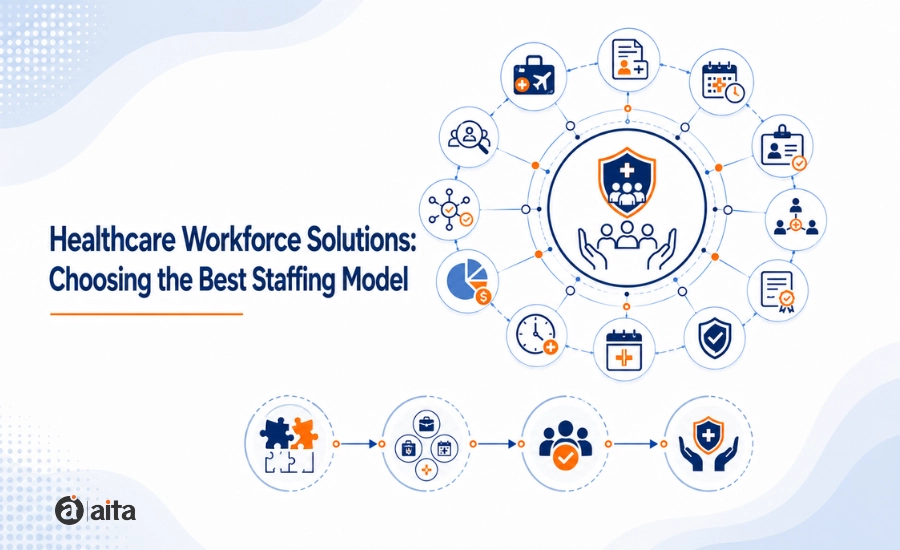
Every hospital administrator and clinic manager eventually hits the same wall: patient volume doesn’t care about your headcount budget. That’s the moment healthcare workforce solutions stop being a line item in an HR plan and start becoming the difference between a unit that functions and one that doesn’t. Whether you’re covering maternity leave in radiology, opening a new outpatient clinic, or trying to keep a rural ER staffed through flu season, the staffing model you choose shapes everything downstream cost, quality of care, and how long your core team sticks around before burning out.
The trouble is that “healthcare staffing” isn’t one thing. It’s travel nursing, locum tenens, per diem pools, direct-hire recruiting, and increasingly, blended arrangements that borrow from all four. Picking the wrong one for the problem in front of you doesn’t just waste money; it can leave a unit understaffed at exactly the wrong moment. This piece walks through the major models, where each one earns its keep, and how to think through the decision like an operator rather than a form-filler.
Why Healthcare Workforce Solutions Need More Than One Playbook
Healthcare staffing shortages rarely look the same twice. A pediatric ICU short-staffed because two nurses moved out of state is a different problem than a cardiology practice that can’t recruit a permanent physician in a town of 40,000 people. Treating both with the same staffing tool is how organizations end up either overpaying for flexibility they didn’t need or under-resourcing a gap that required a faster fix.
That’s really what healthcare workforce solutions are for: matching the shape of the staffing gap to the shape of the solution. Some gaps are seasonal. Some are structural. Some are one-time events like a new service line launch. A workforce strategy that only has one lever usually “post it and hope” will eventually get caught flat-footed by at least one of these scenarios.
Organizations that handle this well tend to treat staffing as a portfolio decision, not a single hire-or-don’t-hire choice. They keep a mix of contract, temporary, and permanent talent in play, and they know in advance which lever to pull for which kind of gap. That’s the mindset worth building before the next shortage hits, not during it.
The Core Staffing Models in Healthcare
Travel Nurse Staffing
Travel nurse staffing exists because nursing shortages are rarely evenly distributed. A hospital in Phoenix might be fully staffed in June and short twelve nurses by August because of seasonal population swings or a competitor poaching half a unit. Travel nurses fill assignments that typically run 13 weeks, though shorter “rapid response” and longer extension contracts both show up regularly.
The appeal is speed and specialization. A well-run staffing partner can often place a credentialed ICU or OR travel nurse within days, not months, a timeline that simply doesn’t exist in permanent recruiting. The trader is cost per hour and the onboarding lift of getting a traveler oriented to your systems, charting software, and unit culture fast enough that they’re productive by week two, not week six.
Travel nurse staffing works best for defined, time-bound gaps: seasonal census spikes, maternity or medical leave coverage, or bridging the months between a resignation and a successful permanent hire. It works less well as a permanent staffing strategy because the premium rates that make sense for a 13-week bridge stop making financial sense as a year-round baseline.
Locum Tenens Staffing
Locum tenens covers the physician and advanced practice side of the same problem. A rural family medicine clinic with one doctor out on parental leave, a hospitalist group short two FTEs after a round of retirements, or a specialty practice that needs coverage while recruiting a permanent partner these are the classic locum tenens scenarios.
What makes locum tenens staffing distinct from nurse staffing is the credentialing runway. Getting a physician properly licensed, privileged, and credentialed at a new facility can take weeks even under an expedited process, so the lead time on a locum placement is usually longer than most administrators expect the first time they need one. Organizations that build locum tenens into their ongoing workforce plan rather than scrambling for it after a resignation letter lands consistently get better coverage and better rates, because their staffing partner has runway to identify the right match instead of whoever happens to be available that week.
Locum tenens also solves a problem travel nursing doesn’t: specialty and subspecialty coverage in markets too small to support a full-time hire. A critical access hospital doesn’t need a full-time cardiologist on staff, but it does need one two days a month, and locum arrangements are often the only realistic way to get that coverage without relocating a family for a role that doesn’t exist five days a week.
Per Diem and Local Contract Staff
Per diem staffing sits closer to home literally. These are clinicians who live in the area and pick up shifts as needed, without the housing stipends or travel logistics that come with travel or locum assignments. Per diem pools are ideal for predictable, short-notice gaps: call-outs, holiday coverage, or a unit that’s consistently one or two shifts short per pay period.
The limitation is scale. Per diem staff can absorb the occasional gap, but a facility trying to cover a structural shortage entirely through per diem pickup usually finds the pool thins out fast, especially for less desirable shifts.
Direct-Hire Placement
Direct-hire recruiting is the long game sourcing, vetting, and placing permanent staff who become part of your core team. It’s slower and requires more upfront investment in the search, but it’s the only model that actually solves a chronic staffing gap rather than covering it. If you find yourself renewing the same travel contract or locum assignment every few months for a role that clearly needs to exist permanently, that’s usually a sign the real fix is a direct-hire search running in parallel.
We’ve written more specifically about how to weigh contract flexibility against permanent hiring in Temporary Staffing vs Direct Hire: Choosing the Right Hiring Strategy, which digs into the decision framework in more depth than space allows here.
Matching the Model to the Actual Problem
The mistake we see most often isn’t picking a “bad” staffing model it’s picking a reasonable model for the wrong kind of gap. A few patterns worth knowing:
Sudden, short-term gap (leave of absence, resignation notice period): Travel nursing or per diem, depending on specialty and how fast you need coverage.
Seasonal or predictable census swing: A standing travel nurse staffing arrangement negotiated ahead of the season, not scrambled together after volume spikes.
Physician or APP coverage in a hard-to-recruit specialty or geography: Locum tenens, often paired with an ongoing direct-hire search running quietly in the background.
Chronic, recurring shortage in the same role: Direct hire is almost always the more cost-effective answer over an 18–24 month horizon, even though it costs more to get started.
New service line or clinic launch: A blended approach locum or travel coverage for the opening months while a permanent team is recruited and onboarded.
None of this is exact science. But asking “is this gap temporary, seasonal, or structural?” before calling a staffing partner will save you from the single most common and expensive mistake in healthcare workforce planning: treating a permanent problem as a temporary one, or vice versa.
AITACS Staffing
Ready to close your talent gap?
Get pre-vetted specialists deployed in 3–10 days. No overhead, no risk — just the right talent, exactly when you need it.
Contact Us
Free consultation · No commitment
Cost Considerations Beyond the Hourly Rate
Bill rate comparisons are the easiest number to grab and the least useful one on its own. A cheaper hourly rate that comes with a longer time-to-fill, a higher no-show rate, or a clinician who needs three extra weeks of orientation isn’t actually cheaper once you account for overtime paid to your core staff covering the gap in the meantime.
The more useful comparison looks at total cost of the vacancy, not just the cost of filling it: overtime and agency spend from the current gap, the clinical and safety cost of running short-staffed, and the onboarding time before a new hire — travel, locum, or permanent — is fully productive. Viewed that way, a locum tenens placement that costs more per day but starts two weeks sooner often comes out ahead of a cheaper option that leaves a unit short through a difficult stretch.
It’s also worth factoring in retention. Burnout from chronic under staffing is one of the more expensive, harder-to-see costs in healthcare workforce planning a unit that loses two experienced nurses to burnout because a travel contract was delayed by budget approval has traded a short-term savings for a much larger long-term cost.
Compliance, Credentialing, and Risk
This is where healthcare staffing genuinely differs from staffing in most other industries, and it’s worth being direct about it. Licensing requirements vary by state, credentialing timelines vary by facility, and malpractice coverage arrangements differ across travel, locum, and direct-hire engagements. A staffing partner who understands the credentialing runway for locum tenens physicians and starts that process early rather than after a signed agreement is the difference between a placement that starts on time and one that slips by a month.
The same applies to compliance documentation: license verification, background checks, drug screening, and facility-specific onboarding requirements all need to be airtight before a clinician’s first shift, not worked out retroactively. This is one of the areas where working with an established staffing partner pays for itself the administrative load of getting this right for every placement, across every state your organization operates in, is substantial enough that most internal HR teams aren’t built to carry it alongside everything else on their plate.
Building a Blended Workforce Strategy
The organizations that handle staffing volatility best rarely rely on a single model. They maintain a core permanent staff, a standing relationship with a staffing partner for travel and per diem coverage, and a locum tenens plan for physician and APP gaps activated before the crisis, not during it.
That kind of readiness comes from planning, not luck. It means knowing your seasonal census patterns well enough to negotiate travel contracts ahead of the spike. It means having a locum tenens conversation started the moment a physician gives notice, not after the departure date. And it means treating direct-hire recruiting as a continuous process for chronically hard-to-fill roles, rather than a project that starts and stops with each vacancy.
Our team at AITA Consulting Services works across all of these models for healthcare organizations from travel nurse staffing and locum tenens placements to permanent recruiting because most facilities need more than one lever, not just one. You can see the full scope of what we support on our pharma healthcare staffing .
A Practical Framework for Choosing
Before your next staffing decision, run through these questions:
Is this gap temporary, seasonal, or structural? The answer points you toward travel/per diem, a standing seasonal arrangement, or direct hire, respectively.
How fast do you actually need coverage? Locum tenens and physician credentialing take longer than most people expect plan backward from your start date.
What’s the real cost of running short-staffed for the time it takes to fill this the “cheap” way? Include overtime, burnout risk, and quality-of-care impact, not just the bill rate.
Does this role need to exist permanently? If you’re refilling the same contract role every few months, that’s your answer.
Do you have a partner who can move across models as the situation changes? A staffing relationship that only does one thing will eventually force you into the wrong tool for the job.
Final Thoughts
There’s no single “best” healthcare staffing model only the model that fits the gap you’re actually trying to close. Travel nurse staffing solves speed and seasonality. Locum tenens solves specialty and geography for physicians and APPs. Per diem solves the small, predictable gaps. Direct hire solves the ones that keep coming back. Most healthcare organizations need access to all four, plus a partner experienced enough to know which one to reach for and when.
If your organization is weighing how to cover an upcoming gap whether it’s a single locum placement or a broader workforce strategy across multiple facilities our team can walk through the options with you. Visit our pharma healthcare staffing page to learn more about how AITA Consulting Services supports healthcare organizations with travel nurse staffing, locum tenens, and permanent placement, or reach out directly to talk through what your next twelve months of staffing needs might look like.
Frequently Asked Questions
What are healthcare workforce solutions?
Healthcare workforce solutions are staffing strategies — including travel nurse staffing, locum tenens, per diem, and direct-hire placement — that help hospitals, clinics, and healthcare systems fill clinical staffing gaps with the right type of talent for the situation. The right solution depends on whether the gap is temporary, seasonal, or a structural shortage that needs a permanent hire.
What is the difference between travel nurse staffing and locum tenens?
Travel nurse staffing places registered nurses in short-term assignments, typically 13 weeks, to cover nursing shortages, while locum tenens places physicians and advanced practice providers in temporary roles to cover physician-level gaps. Locum tenens placements generally require a longer lead time because physician credentialing and privileging at a new facility takes several weeks, unlike nursing licensure, which is often quicker to verify.
How do I know if I need temporary staffing or a direct-hire placement?
If a staffing gap is tied to a specific event — a leave of absence, a seasonal census spike, or the search for a permanent replacement — temporary staffing like travel nursing or locum tenens is the better fit. If you find yourself renewing the same contract role every few months, that's a sign the position is a permanent need and a direct-hire search will be more cost-effective over an 18–24 month horizon.
Is locum tenens staffing more expensive than hiring a permanent physician?
Locum tenens typically costs more per day than a permanent physician's salary, but it eliminates recruiting, relocation, and benefits costs, and it fills the gap far faster than a permanent search. For rural or underserved markets that only need subspecialty coverage a few days a month, locum tenens is often more cost-effective than trying to recruit a full-time physician for a role that doesn't need to be full-time.
What should healthcare organizations look for in a staffing partner?
Healthcare organizations should look for a staffing partner with experience across multiple models — travel nursing, locum tenens, per diem, and direct hire — along with strong credentialing, licensing, and compliance processes across every state they operate in. A partner who can move between staffing models as a facility's needs change is more valuable than one that only offers a single type of placement.
Categories
Pharma & Healthcare Staffing
Let’s Build Your Team
Connect with AITACS to find pre-vetted healthcare and pharma professionals, reduce hiring time, and ensure uninterrupted patient care.
Get Started