Diversity Hiring: Building a Supplier-Diverse Workforce Strategy
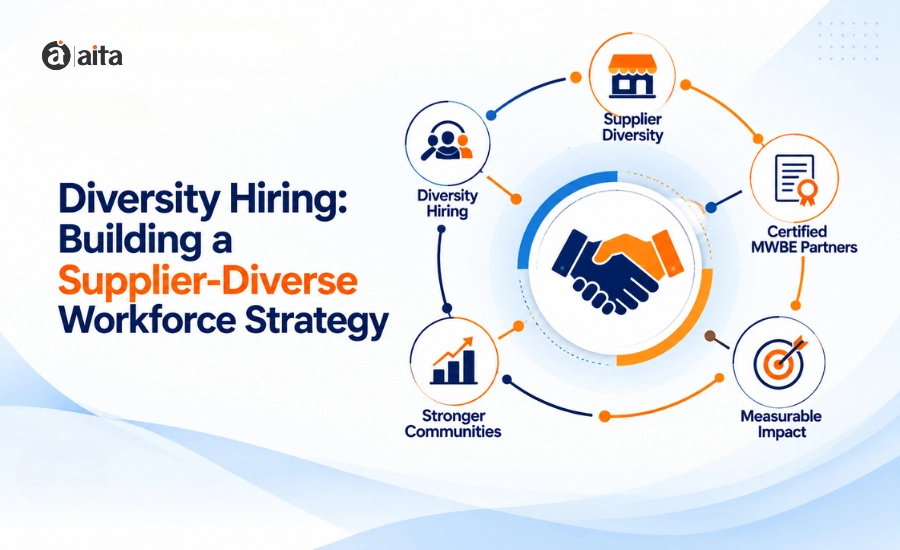
Diversity hiring gets discussed constantly in HR circles, but supplier diversity, the practice of sourcing goods and services, including staffing, from certified minority- and women-owned businesses, rarely gets the same attention despite being one of the more direct ways a company can put its diversity commitments into practice. The two are connected more closely than most organizations realize, and building a genuine supplier-diverse workforce strategy means treating that connection intentionally rather than as an afterthought.
Plenty of companies have a diversity statement on their careers page and a separate, disconnected procurement policy that never mentions supplier diversity at all. That gap is where good intentions quietly fail to become measurable outcomes. Closing it requires understanding both sides of the equation: how a company hires, and who it hires through.
Why Diversity Hiring and Supplier Diversity Belong in the Same Conversation
Diversity hiring typically refers to a company’s internal recruiting practices, the steps taken to build a workforce that reflects a broader range of backgrounds, experiences, and perspectives. Supplier diversity operates on a parallel track, focused on which vendors and partners a company chooses to work with, including staffing agencies, when contract or temporary labor is part of the mix.
These two practices reinforce each other in practical ways. A company working with a certified MWBE staffing partner is, by definition, extending its economic impact to a minority-owned business while also gaining access to that partner’s specific expertise and candidate networks. The relationship isn’t just symbolic. Diverse-owned staffing firms often maintain deep, authentic connections within communities and professional networks that a larger, more generic vendor may not reach as effectively.
Companies that separate these two efforts, treating internal hiring diversity as an HR initiative and supplier diversity as a procurement checkbox, tend to under-perform both. Aligning them under a shared strategy produces measurably stronger outcomes on both fronts, because the same intentionality that improves internal recruiting practices tends to improve vendor selection criteria too.
Where Diversity Hiring and Supplier Diversity Meet
Two distinct practices that produce their strongest results together
Diversity
Hiring
Sourcing, structured
interviews, inclusive
job descriptions
Supplier
Diversity
Certified MWBE, WBE,
and MBE vendor
selection
Unified DEI
Strategy
shared accountability
Stronger Talent Pipeline
Certified Vendor Spend
Auditable Impact Reporting
What a Genuine Supplier Diversity Program Looks Like
A supplier diversity program that actually works goes beyond setting a spend target and hoping departments hit it organically. It requires active sourcing of certified diverse vendors, clear criteria for what counts as a qualifying business, and accountability built into procurement decisions rather than treated as optional.
Certification matters here more than many companies initially realize. A vendor claiming to be minority- or women-owned without third-party certification creates verification headaches down the line, particularly for companies that report supplier diversity metrics to boards, investors, or regulatory bodies. Working with vendors holding recognized certifications, such as MBE, WBE, or SWaM status, removes that ambiguity and gives procurement teams a defensible basis for their vendor selections.
Choosing an MWBE Staffing Partner: What to Evaluate
Selecting an MWBE staffing partner requires the same rigor a company would apply to any staffing vendor selection, plus a few additional considerations specific to certification and impact reporting.
Start with certification verification. Legitimate MWBE, WBE, and MBE certifications come from recognized third-party certifying bodies, and a credible partner will be able to provide documentation readily rather than making the claim without backing it up. Beyond certification, evaluate the partner’s actual placement track record in the roles a company needs filled. Diversity credentials matter, but they don’t substitute for recruiting competence. The strongest partners bring both.
It’s also worth asking how a potential partner sources candidates. A staffing firm that maintains genuine relationships with diverse professional networks, university programs, and community organizations is going to deliver a meaningfully different candidate pool than one relying entirely on the same job boards every other agency uses.
Working With a WBE Certified Vendor Across Multiple Roles
A WBE certified vendor that can support hiring across multiple role types, rather than a narrow specialty, offers practical advantages beyond the certification itself. Consolidating staffing relationships with fewer, deeper partnerships tends to produce better outcomes than spreading contingent hiring across a large number of vendors with shallow relationships to any of them.
This matters particularly for companies trying to scale their supplier diversity spend meaningfully. A single strong WBE certified vendor covering professional staffing, administrative roles, and specialized placements can move the needle on supplier diversity metrics far more than a handful of small, disconnected diverse vendor relationships that each handle a narrow slice of hiring needs.
Building Inclusive Hiring Practices That Go Beyond Sourcing
Inclusive hiring often gets reduced to sourcing diversity, making sure a wider range of candidates enters the pipeline, without enough attention paid to what happens after that point. Sourcing a diverse candidate pool and then running those candidates through a screening and interview process built around narrow, unexamined assumptions about what a strong candidate looks like undermines the sourcing effort entirely.
Structured interviews, where every candidate for a role answers the same core questions evaluated against the same criteria, reduce the influence of unconscious bias more effectively than unstructured conversations where interviewers ask whatever comes to mind. Job descriptions matter too. Language that inadvertently signals a narrow ideal candidate, overly aggressive tone, unnecessary jargon, inflated experience requirements, can discourage qualified candidates from applying before the process even begins.
Panel diversity in the interview process itself also shapes outcomes. Candidates evaluated exclusively by interviewers who don’t share or understand their background sometimes face subtle, unintentional friction that a more varied panel would catch and correct.
Developing a DEI Recruitment Strategy That Sticks
A DEI recruitment strategy that survives beyond a single hiring cycle needs infrastructure, not just intention. That means setting specific, measurable goals rather than vague aspirations, tracking pipeline diversity at each stage of the hiring funnel rather than only at the offer stage, and building accountability into hiring manager performance reviews rather than treating diversity outcomes as someone else’s responsibility.
Measurement matters enormously here. A company that tracks how many diverse candidates enter the pipeline but not how many make it through each subsequent stage is missing the data that actually reveals where the process breaks down. If diverse candidates are entering at a healthy rate but disappearing disproportionately at the interview or offer stage, that’s a different problem than a sourcing gap, and it requires a different fix.
Sustainable strategies also build in regular review cycles rather than treating diversity hiring as a project with an end date. Talent markets shift, sourcing channels that worked well two years ago may have become less effective, and a strategy that isn’t revisited periodically tends to quietly drift out of alignment with what’s actually producing results.
Building a Diverse Supplier Network Beyond Staffing
While staffing is often the most visible connection between diversity hiring and supplier diversity, a genuinely diverse supplier network extends further, covering everything from office services to technology vendors to professional services firms. Companies serious about supplier diversity build this network deliberately, setting targets by category and tracking spend across the full vendor portfolio rather than concentrating diversity efforts in a single area.
This broader network approach also creates resilience. Relying on a single diverse vendor relationship to carry an entire supplier diversity program creates concentration risk, both in terms of program continuity if that relationship ends and in terms of genuinely representing the range of diverse-owned businesses available in a given market.
Common Mistakes That Undermine Diversity Hiring Efforts
A few recurring mistakes show up across companies that mean well but struggle to see real results from their diversity hiring investments.
The first is treating diversity hiring as exclusively a top-of-funnel problem. Companies pour resources into sourcing diverse candidates but leave the rest of the hiring process, screening criteria, interview structure, offer negotiation, untouched. A diverse pipeline that funnels into a biased or inconsistent evaluation process doesn’t produce diverse outcomes, it just produces a diverse pool of rejected candidates.
The second is setting goals without the data infrastructure to track progress against them. A target to increase diverse hires by a certain percentage means little if nobody is tracking conversion rates at each pipeline stage, and it becomes impossible to tell whether a shortfall stems from sourcing, screening, or something happening later in the process.
The third is disconnecting supplier diversity from hiring diversity entirely, running them as separate initiatives owned by different teams with no shared reporting or strategy. This duplication of effort wastes resources that a unified approach would use more efficiently, and it often means neither initiative gets the full organizational attention it needs to actually move outcomes.
AITACS Staffing
Ready to close your talent gap?
Get pre-vetted specialists deployed in 3–10 days. No overhead, no risk — just the right talent, exactly when you need it.
Contact Us
Free consultation · No commitment
How Workforce Strategy Trends Intersect With Diversity Goals
Broader shifts in how enterprises manage their workforce are increasingly relevant to diversity hiring strategy as well. As more companies build unified visibility across contingent and permanent workers, the kind of data infrastructure explored in Total Talent Management: Unifying Contingent and Permanent Workforce Data, that same infrastructure creates an opportunity to track supplier diversity metrics alongside broader workforce data rather than managing them in a completely separate reporting system.
Companies that already track blended workforce data are well positioned to layer in supplier diversity reporting without building an entirely new measurement system from scratch. This kind of integration tends to keep diversity metrics visible in the same conversations where workforce planning decisions actually get made, rather than existing in a separate report that leadership reviews once a quarter.
Working With AITACS as a Certified Diverse Staffing Partner
AITACS operates as a certified MWBE, WBE, MBE, and SWaM firm, which means partnering with us for staffing needs contributes directly to a company’s own supplier diversity metrics while also delivering the recruiting expertise a competitive hiring market demands.
Our professional staffing services combine this certified status with deep experience across accounting and finance, human resources, operations, and administrative leadership roles, giving companies a way to strengthen supplier diversity outcomes without compromising on placement quality or speed.
This dual value matters especially for organizations trying to build a genuine diverse supplier network rather than checking a compliance box. Working with our professional staffing team means a company’s contingent and permanent hiring can directly support its supplier diversity goals, with reporting that makes the connection between staffing spend and diversity outcomes clear and auditable.
Frequently Asked Questions
What's the difference between diversity hiring and supplier diversity?
Diversity hiring refers to a company's internal recruiting practices aimed at building a workforce that reflects a broader range of backgrounds and perspectives. Supplier diversity focuses on which vendors and partners a company works with, including staffing agencies, prioritizing certified minority- and women-owned businesses.
What should a company look for when choosing an MWBE staffing partner?
Start by verifying certification through a recognized third-party certifying body, since legitimate partners can provide documentation readily. Beyond certification, evaluate the partner's actual placement track record in relevant roles and how they source candidates, since diversity credentials alone don't substitute for recruiting competence.
Why does certification matter for supplier diversity vendors?
Working with certified vendors, such as those holding MBE, WBE, or SWaM status, removes ambiguity around a company's supplier diversity reporting and gives procurement teams a defensible basis for vendor selection. Uncertified vendors claiming diverse ownership can create verification issues, particularly for companies reporting these metrics to boards or regulatory bodies.
How can companies measure whether their diversity hiring efforts are actually working?
Effective measurement tracks candidate diversity at each stage of the hiring funnel, not just at the offer stage, since that reveals where the process breaks down. A pipeline that starts diverse but narrows disproportionately during interviews or offers points to a different problem than a sourcing gap, and each requires a different fix.
Can supplier diversity and diversity hiring share the same reporting system?
Yes, and companies that already track blended workforce data across contingent and permanent workers are well positioned to layer in supplier diversity metrics without building a separate measurement system. This keeps diversity outcomes visible in the same conversations where broader workforce planning decisions get made.
Categories
Professional Staffing
Let’s Build Your Team
Stop losing weeks to unqualified applicants. Connect with AITACS experts to find pre-screened, interview-ready candidates, reduce hiring time, and drive business growth with confidence.
Get Started