Professional Recruitment: Why Soft Skills Matter More Than Ever
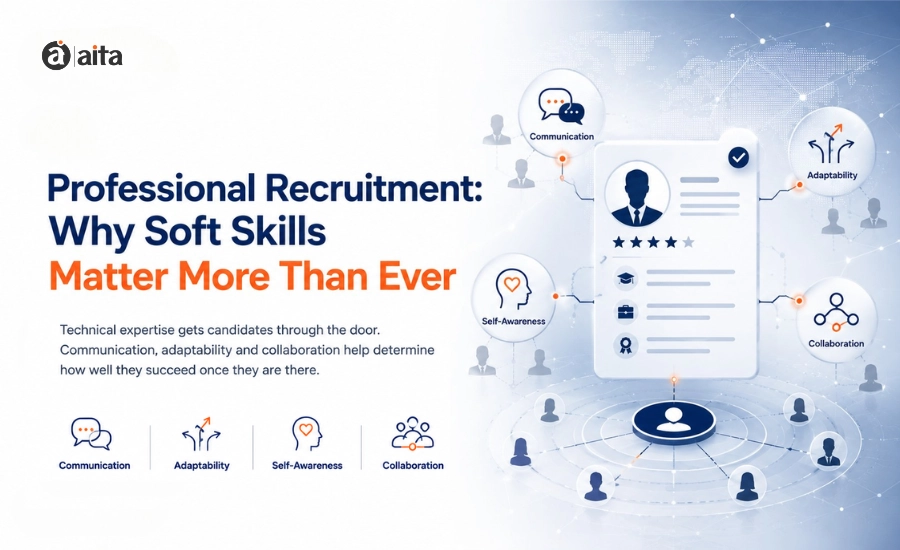
Professional recruitment used to run almost entirely on credentials the right degree, the right certification, a resume that checked every technical box on the job description. That approach hasn’t disappeared, but it’s stopped being sufficient on its own. Hiring managers who’ve been burned by a technically brilliant hire who couldn’t collaborate, communicate under pressure, or adapt when priorities shifted have learned the hard way that competence alone doesn’t make someone good at the job.
We’ve sat in on enough post-hire debriefs to notice the pattern. When a placement doesn’t work out, it’s rarely because the person lacked the technical skill they were hired for. It’s because they couldn’t navigate ambiguity, handle feedback, or work well with a team that didn’t operate exactly the way they expected. Skills gaps get caught in an interview. Soft skills gaps often don’t show up until three months in, and by then the cost of the mismatch is real.
What Changed in Professional Recruitment
The shift toward valuing soft skills isn’t a trend that appeared overnight. It’s the byproduct of a few real changes in how work actually happens.
Hybrid and Remote Work Removed the Safety Net
When teams sat in the same office, plenty of communication and collaboration friction got smoothed over informally a quick conversation at someone’s desk, body language that filled in the gaps a written message couldn’t. Distributed teams don’t have that safety net. Someone who struggles to communicate clearly in writing, read a room over video, or proactively flag a problem before it becomes urgent creates friction that used to be invisible and now shows up immediately in a Slack thread or a missed deadline.
Roles Have Gotten Less Predictable
Fewer jobs today look the same in year two as they did in year one. Technology shifts, business priorities pivot, and the person who thrives isn’t necessarily the one with the deepest technical knowledge at the moment of hire it’s the one who can learn quickly, adjust without becoming defensive, and keep contributing when the ground shifts under them. That kind of adaptability is a soft skill, and it’s increasingly the difference between someone who grows into a role and someone who plateaus in it.
Teams Are Doing More Cross-Functional Work
Specialists rarely operate in isolation anymore. An engineer works directly with product and design; a finance analyst sits in on strategy conversations that used to happen without them. This kind of cross-functional collaboration demands the ability to translate specialized knowledge for people who don’t share it, negotiate priorities respectfully, and build trust with people outside your immediate discipline. None of that shows up on a technical skills assessment.
The Soft Skills That Actually Predict Success
“Soft skills” gets used as a catch-all term so often that it loses specificity. In practice, a handful of them consistently separate strong hires from mediocre ones, particularly at the professional and leadership level.
Four Soft Skills That Predict hiring Success
1
Communication
Under Pressure
Delivering bad news,
asking for help, and
pushing back respectfully
2
Emotional
Regulation
Staying level-headed
and self-aware when
plans go sideways
3
Adaptability
Adjusting to shifting
priorities without
becoming defensive
4
Collaborative
Problem-Solving
Working through a
failed solution together,
without territorial friction
Communication Under Pressure
Anyone can communicate clearly when things are going well. What matters is whether someone can deliver bad news honestly, ask for help without embarrassment, or push back on a decision they disagree with respectfully and without derailing the relationship. This is one of the hardest things to assess in a single interview, which is exactly why it deserves deliberate attention in the process rather than an assumption based on polish.
Emotional Regulation and Self-Awareness
The ability to stay level-headed when a project goes sideways, a deadline moves up unexpectedly, or feedback stings more than intended is a genuine skill, not a personality trait people either have or don’t. Candidates who can talk honestly about a time they got something wrong, and what they did about it, are usually showing more self-awareness than candidates who present a flawless narrative with no rough edges.
Adaptability
This shows up in how someone talks about change, not just whether they claim to be “flexible” on a resume. Ask about a time priorities shifted mid-project and listen for whether they describe genuine adjustment or quiet resentment. The difference is usually obvious once you know to listen for it.
Collaborative Problem-Solving
Technical skill gets someone to a solution. Collaborative problem-solving is what happens when the first solution doesn’t work and the team needs to figure out the next move together, without anyone getting territorial about whose idea gets tried next. This matters even more as roles become less siloed.
AITACS Staffing
Ready to close your talent gap?
Get pre-vetted specialists deployed in 3–10 days. No overhead, no risk — just the right talent, exactly when you need it.
Contact Us
Free consultation · No commitment
Why This Matters Even More for Leadership Hiring
Leadership hiring carries a magnified version of this problem, because the cost of a soft-skills mismatch doesn’t stay contained to one person’s individual output it ripples through everyone who reports to them.
A excellent manager who can’t give constructive feedback, delegate without micromanaging, or handle conflict between team members will quietly erode the performance of an entire team, often well before the damage shows up in a formal metric. By the time turnover numbers or engagement scores flag the problem, the team has usually been struggling for months.
This is part of why leadership hiring processes benefit from structured behavioral interviewing rather than relying on a strong resume and confident interview presence. Confidence and competence aren’t the same thing, and it’s easy to mistake one for the other in a 45-minute conversation. The strongest leadership candidates tend to talk about their teams’ wins more than their own, describe specific moments of difficult feedback they delivered or received, and show genuine curiosity about how the organization actually works rather than just how they’ll perform in it.
The Connection to Employee Engagement
Soft skills and employee engagement are more directly linked than most hiring processes account for. Engagement doesn’t come primarily from compensation or perks it comes from feeling heard, respected, and part of a team that functions well. Every one of those outcomes depends on the soft skills of the people someone works with every day, especially their direct manager.
A team led by someone with strong technical judgment but poor communication skills will often show declining engagement scores within a few quarters, even if the manager’s actual decisions are sound. People disengage not because the strategy was wrong, but because they didn’t feel informed, consulted, or respected along the way. Conversely, a manager with strong interpersonal skills can carry a team through a genuinely difficult period layoffs, reorgs, and a rough product cycle without losing trust, simply because people feel like they’re being treated honestly.
This is a strong argument for weighting soft skills heavily in professional recruitment, not as a tiebreaker between two similarly qualified candidates, but as a primary evaluation criterion from the start. Organizations that treat soft skills as secondary to technical qualifications tend to see it reflected later in retention and engagement data, usually after the cost of the mismatch has already been paid.
How to Actually Evaluate Soft Skills in an Interview
Recognizing that soft skills matter is the easy part. Building an interview process that reliably assesses them is harder, and it’s where a lot of well-intentioned hiring processes fall short.
Ask Behavioral Questions With Specific Follow-Ups
“Tell me about a time you disagreed with a decision” is a fine opening question, but the real signal comes from the follow-ups. What did they actually say in that conversation? What was the outcome? Would they handle it differently now? Vague or rehearsed-sounding answers tend to fall apart under specific follow-up questions in a way that genuine experience doesn’t.
Involve More Than One Interviewer Perspective
Soft skills read differently depending on who’s in the room. A candidate might come across as confident and collaborative to a hiring manager but seem dismissive or impatient to a peer-level interviewer. Structuring the process so multiple people, at different levels, get direct interaction time with the candidate catches inconsistencies that a single interviewer’s impression can miss.
Pay Attention to How Candidates Talk About Former Colleagues and Managers
Soft skills read differently depending on who’s in the room. A candidate might come across as confident and collaborative to a hiring manager but seem dismissive or impatient to a peer-level interviewer. Structuring the process so multiple people, at different levels, get direct interaction time with the candidate catches inconsistencies that a single interviewer’s impression can miss.
Weight Reference Checks Toward Working Style, Not Just Performance
Most reference checks ask some version of “were they good at the job.” Better questions ask how the person handled disagreement, how they communicated when something went wrong, and what it was actually like to work alongside them day to day. These answers surface soft-skills patterns that a candidate’s own self-description, however honest, can’t fully capture.
Balancing Technical Requirements With Soft Skills
None of this is an argument for ignoring technical qualifications. A role still needs someone who can actually do the work. The point is that technical competence should function as a threshold, not the entire evaluation. Once a candidate clears the bar for the skills the role genuinely requires, soft skills become the deciding factor between candidates who look similar on paper but will perform very differently in practice.
This mirrors a decision staffing teams already make constantly when weighing how to structure a role in the first place matching the right hiring approach to the actual need, rather than defaulting to whatever process is most familiar. We explored a similar version of this judgment call in our piece on contract versus permanent IT hiring, where the right decision depends on evaluating the specific situation rather than applying a one-size-fits-all rule. The same discipline applies here: soft skills assessment isn’t a box to check, it’s a deliberate part of matching the right person to the actual demands of the role.
Building This Into a Consistent Hiring Process
The organizations that do this well don’t rely on individual interviewer instinct alone. They build soft skills evaluation into the structure of the process itself standardized behavioral questions, defined follow-up prompts, and a shared rubric that multiple interviewers use to compare notes afterward. This doesn’t remove the human judgment involved; it makes that judgment more consistent and less dependent on which interviewer happened to click with a particular candidate.
For leadership hiring especially, it’s worth involving people from outside the immediate hiring chain a peer from another department, someone who’ll be a direct report if the structure allows it to get perspectives beyond the hiring manager’s own read on the candidate. Soft skills show up differently across relationships, and the fuller picture from multiple vantage points is almost always more accurate than any single interviewer’s impression.
Bringing It Together
Professional recruitment that ignores soft skills is making decisions with half the information that actually predicts success. Technical qualifications get someone through the door, but communication, adaptability, emotional regulation, and collaborative problem-solving determine whether that person thrives once they’re through it and whether the people around them do too.
Companies that build soft skills evaluation into their hiring process deliberately, rather than trusting gut instinct in a single interview consistently see it pay off in retention, team performance, and employee engagement over time. This is especially true in leadership hiring, where the cost of getting it wrong extends well beyond one person’s individual output.
If your organization is looking to strengthen how it evaluates candidates beyond the resume, particularly for roles where team dynamics and leadership matter as much as technical skill, it’s worth building that structure deliberately rather than leaving it to chance. Our team at AITA Consulting Services works with organizations across professional staffing services to build hiring processes that weigh both technical fit and the interpersonal skills that actually determine long-term success. Reach out to talk through how a more complete evaluation process could strengthen your next hire.
Frequently Asked Questions
Why are soft skills becoming more important in professional recruitment?
Soft skills matter more today because hybrid work removed informal communication safety nets, roles have become less predictable, and cross-functional collaboration now requires interpersonal skills that a technical assessment alone can't measure.
What soft skills matter most in leadership hiring?
The most predictive soft skills for leadership hiring include communication under pressure, emotional regulation and self-awareness, adaptability, and the ability to give and receive constructive feedback without damaging team trust.
How do soft skills affect employee engagement?
Employee engagement is closely tied to how respected and heard people feel day to day, which depends heavily on a manager's communication and interpersonal skills — not just their technical decisions or strategic judgment.
How can employers evaluate soft skills during an interview?
Employers can evaluate soft skills through behavioural questions with specific follow-ups, involving multiple interviewers at different levels, listening for how candidates discuss past colleagues, and asking reference checks about working style rather than just performance.
Should technical skills or soft skills be prioritized in hiring?
Technical skills should function as a baseline threshold for the role, while soft skills often become the deciding factor between candidates who are similarly qualified on paper but will perform differently in practice.
Categories
Professional Staffing
Let’s Build Your Team
Stop losing weeks to unqualified applicants. Connect with AITACS experts to find pre-screened, interview-ready candidates, reduce hiring time, and drive business growth with confidence.
Get Started