Healthcare Staffing: Solving Workforce Shortages with Smarter Hiring
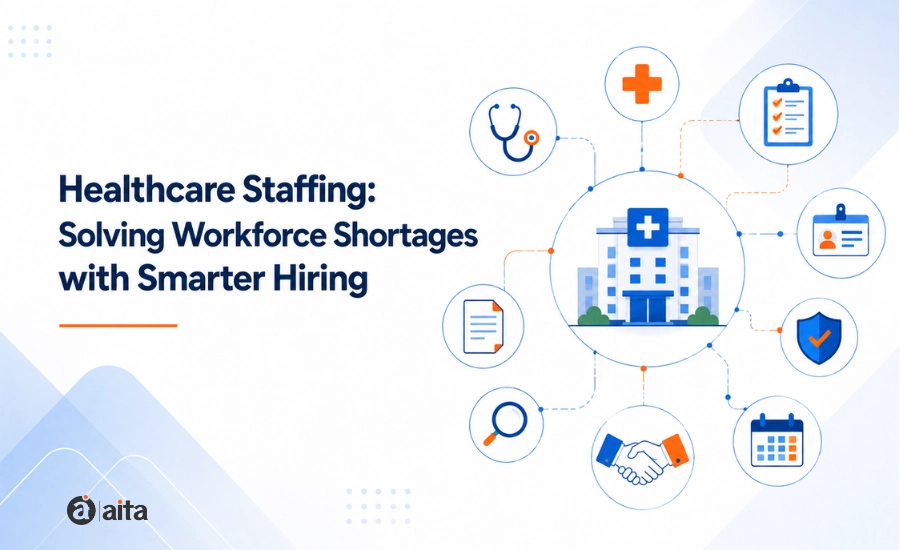
Healthcare staffing has moved from a back-office HR concern to a front-line survival issue for hospitals, clinics, and long-term care facilities across the country. Every open nursing shift, every unfilled clinical role, translates directly into patient wait times, staff burnout, and, in the worst cases, care that suffers. The organizations pulling ahead right now aren’t necessarily the ones with the biggest budgets they’re the ones that have rethought how they find, vet, and retain clinical talent.
This isn’t a new problem, but it has changed shape. A decade ago, staffing shortages were mostly cyclical, tied to flu season or regional nursing school output. Today, they’re structural: an aging workforce heading toward retirement, burnout accelerated by the pandemic years, and a widening gap between how fast facilities need to hire and how slowly traditional recruitment processes move. Solving it requires more than posting more job ads. It requires a different hiring model altogether.
The Real Cost of the Healthcare Staffing Shortage
Ask any hospital administrator what an open RN position costs them, and you’ll rarely get a single number because the cost shows up in so many places at once. There’s the direct expense of overtime and agency premiums to cover the gap. There’s the indirect cost of nurse-to-patient ratios stretching thin enough to affect HCAHPS scores. And there’s the compounding cost of burnout: staff who are already stretched thin watching a colleague’s position sit vacant for months tend to start looking for the exit themselves.
Clinical staffing gaps rarely stay contained to one department. A shortage in the ICU pulls float pool nurses from med-surg. A vacancy in radiology delays discharge planning. The ripple effects are why workforce planning has become a board-level conversation rather than something left entirely to HR. We’ve written before about how a single bad hire quietly drains a company through lost productivity, retraining costs, and team morale in healthcare; that same math applies, except the stakes include patient outcomes. If you haven’t already, it’s worth reading our breakdown of the true cost of a bad hire to see how quickly a mis-hire’s cost compounds because the same logic applies with even sharper consequences in clinical settings.
Why Traditional Hospital Recruitment Falls Short
Most hospital recruitment teams are still built around a model designed for a slower labor market: post the role, wait for applications, screen resumes, schedule interviews, extend an offer, and hope the candidate doesn’t take a competing offer in the meantime. That process can easily stretch past 60 or 90 days. Meanwhile, a traveling nurse agency can often place someone in a matter of days at a premium that erodes margins over time.
The mismatch isn’t really about effort. Internal recruiting teams in healthcare are often understaffed themselves, juggling req volumes that would be unmanageable even with unlimited time. What tends to break down is:
Sourcing reach. Internal job boards attract active job seekers, but the strongest clinical candidates are frequently passive already employed, not actively browsing postings, and only responsive to targeted outreach.
Credential verification speed. Licensing checks, background screens, and compliance documentation take time, and any bottleneck here delays start dates even after a candidate accepts.
Local market knowledge. Compensation benchmarks and cultural fit vary significantly by region and even by facility type, and generic postings rarely account for that nuance.
None of this means hospitals are doing recruitment poorly. It means the traditional playbook was never built for the volume and urgency healthcare organizations now face.
What Smarter Nurse Staffing Actually Looks Like
Smarter doesn’t mean faster for the sake of speed it means matching the right clinician to the right role with fewer wasted cycles. That distinction matters because rushed hiring in healthcare tends to backfire, producing exactly the turnover it was meant to prevent.
Reactive Hiring vs. a Strategic Healthcare Staffing Partnership
100
55
Time-to-Fill
(Clinical Role)
(Clinical Role)
100
40
Early Turnover
(Within 6 Months)
(Within 6 Months)
100
45
Credentialing
Cycle Time
Cycle Time
Reactive, In-House Only Hiring
Strategic Staffing Partnership
Illustrative comparison based on typical outcomes of ad-hoc vs. pipeline-based clinical hiring models.
Building a Clinical Staffing Pipeline Before You Need It
The facilities with the least chaotic hiring seasons are usually the ones that stopped treating staffing as reactive. Instead of scrambling when a nurse gives notice, they maintain an active bench of pre-vetted candidates people who’ve already been screened, credentialed, and assessed for fit, even if there’s no open role for them yet. When a position opens, the search starts from a warm pipeline instead of a blank job board.
This is where a staffing partner with deep clinical staffing experience earns its keep. A partner who already understands your specialty mix, shift patterns, and facility culture can present qualified candidates in days rather than weeks, because they’re not starting the search from scratch every time a req comes in.
Credentialing and Compliance as a Competitive Advantage
Every healthcare hire carries a compliance layer that most other industries don’t deal with: license verification, board certifications, background checks, drug screening, immunization records, and often facility-specific competency assessments. Handled poorly, this becomes the single biggest drag on time-to-fill. Handled well, it becomes a differentiator candidates move faster through a clean, well-managed process, and facilities avoid the liability exposure that comes from a documentation gap slipping through.
Facilities that outsource this piece to a specialized partner often find it’s not just about speed. It’s about reducing the administrative burden on internal HR staff who would otherwise be chasing paperwork instead of focusing on retention and culture.
There’s also a geographic dimension worth naming. Rural and community hospitals face a version of this problem that’s often more acute than what larger urban health systems deal with smaller talent pools nearby, fewer nursing programs feeding the pipeline locally, and less name recognition to compete against big health systems for the same candidates. For these facilities, a staffing partner’s reach beyond the immediate region isn’t a nice-to-have; it’s often the only realistic way to keep specialty positions like ICU or OR nursing staffed at all.
Balancing Flexibility and Continuity of Care
One tension every healthcare organization eventually confronts is the trade-off between flexibility and continuity. Per diem and travel staff solve immediate coverage gaps, but lean too heavily on a rotating cast of temporary clinicians and patient continuity suffers care teams lose the institutional knowledge that comes from staff who know the unit, the workflows, and the patients.
The organizations that manage this well tend to blend their workforce deliberately rather than by accident. A core of permanent staff anchors continuity of care, supplemented by a flexible layer of contract or per diem clinicians who can absorb volume spikes, seasonal demand, or unexpected vacancies. Getting that ratio right is less about a fixed formula and more about understanding your own patient volume patterns, turnover trends, and budget realities, which is exactly the kind of workforce planning a staffing partner familiar with your organization can help model out.
AITACS Staffing
Ready to close your talent gap?
Get pre-vetted specialists deployed in 3–10 days. No overhead, no risk — just the right talent, exactly when you need it.
Contact Us
Free consultation · No commitment
Technology’s Role Without Losing the Human Element
It’s tempting to think the staffing shortage is purely a technology problem waiting for the right software to solve it. Applicant tracking systems, automated screening tools, and credentialing platforms genuinely do speed up parts of the process. But technology alone doesn’t solve a shortage rooted in workforce supply and demand it just makes the existing pipeline move faster, which only helps if the pipeline has quality candidates in it to begin with.
Where technology earns its value is in removing friction: automating license verification checks, flagging expiring certifications before they lapse, and surfacing passive candidates who match a facility’s specific needs based on past placement data. The best staffing relationships pair that efficiency with something software can’t replicate a recruiter who actually understands the difference between a Level II and Level III trauma center or who knows which candidates thrive in a fast-paced ED versus a quieter outpatient setting. That judgment is still fundamentally human, and it’s often the difference between a placement that lasts eighteen months and one that lasts eighteen years.
There’s a second, quieter benefit to getting the technology layer right: data. Facilities that track time-to-fill, offer-acceptance rates, and early turnover by role and unit start to see patterns they couldn’t spot before which shifts are hardest to cover, which sign-on incentives actually move the needle, and which specialties need a longer sourcing runway than others. That data doesn’t replace judgment, but it sharpens it, turning next year’s hiring plan into something closer to a forecast than a guess.
Building a Staffing Strategy That Holds Up
The healthcare staffing shortage isn’t resolving itself anytime soon, and hoping next year’s graduating nursing class closes the gap isn’t a strategy. What separates organizations that are merely surviving from the ones that are actually staffed well is a shift in mindset from reactive hiring to deliberate workforce planning, from generic job postings to specialized clinical recruitment, and from vendor transactions to genuine staffing partnerships.
If your organization is feeling the strain of open clinical roles, prolonged vacancies, or rising agency costs, it may be time to rethink how you’re approaching hospital recruitment altogether. AITACS works alongside healthcare organizations to build staffing strategies that hold up under real-world pressure not just filling seats, but filling them with clinicians who stay.
Frequently Asked Questions
What’s the difference between nurse staffing and general clinical staffing?
Nurse staffing typically refers specifically to placing RNs, LPNs, and nursing support roles, while clinical staffing is the broader category that also covers allied health professionals, technicians, therapists, and other patient-care roles across a facility.
How long does hospital recruitment usually take through a staffing partner?
It varies by role complexity and speciality, but a partner with an existing candidate pipeline and streamlined credentialing process can often present qualified candidates significantly faster than a from-scratch internal search frequently cutting time-to-fill by weeks rather than days.
Is healthcare staffing only useful for temporary coverage?
No. While per diem and travel placements solve short-term gaps, healthcare staffing partners increasingly support permanent placements, direct-hire searches, and blended workforce strategies that combine both.
What should a facility look for beyond speed when choosing a staffing partner?
No. While per diem and travel placements solve short-term gaps, healthcare staffing partners increasingly support permanent placements, direct-hire searches, and blended workforce strategies that combine both.
What should a facility look for beyond speed when choosing a staffing partner?
Retention outcomes, credentialing thoroughness, and specialty-specific recruiting experience matter more over time than raw speed alone. A fast placement that doesn’t last isn’t actually solving the shortage.
Categories
Pharma & Healthcare Staffing
Let’s Build Your Team
Connect with AITACS to find pre-vetted healthcare and pharma professionals, reduce hiring time, and ensure uninterrupted patient care.
Get Started