Talent Cloud: Build a Private Talent Pool for Faster Hiring
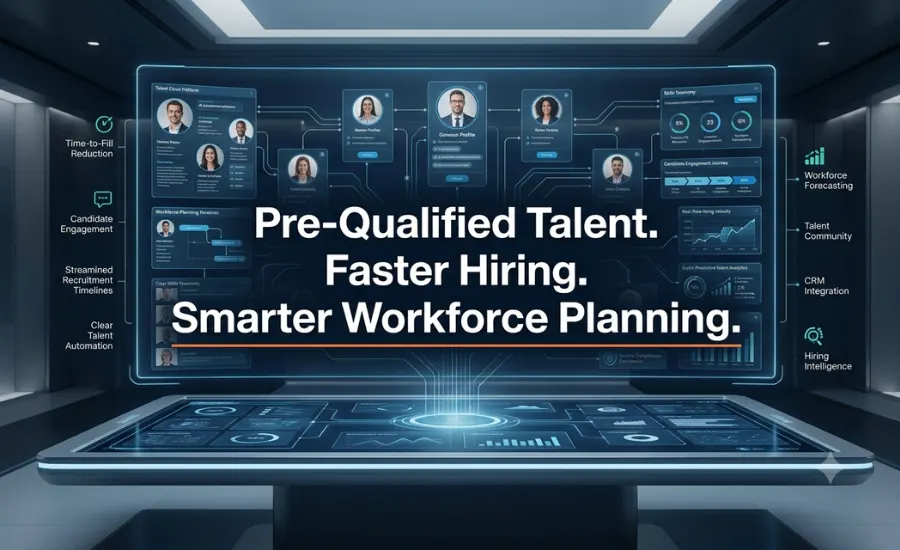
A talent cloud is what separates hiring teams who scramble every time a requisition opens from hiring teams who already know who they’re going to call. Instead of starting from zero with every search, a talent cloud gives you a living, searchable, private talent pool of pre-qualified candidates you’ve already engaged people who applied before, referred someone, attended an event, or simply raised a hand to say they’re interested in your organization someday.
For hiring managers and HR leaders under pressure to fill roles faster without sacrificing quality, that shift in mindset from reactive sourcing to a standing pool of warm relationships is one of the highest-leverage moves available in 2026. This guide walks through what a talent cloud actually is, how it differs from the resume databases most companies already have, and how to build one that genuinely shortens your time-to-fill.
It also matters more than it used to. Candidate expectations have shifted, competition for specialized skills hasn’t eased, and the cost of a slow or misfired hire keeps climbing. Organizations that still treat every requisition as a fresh start are, in effect, choosing the hardest and slowest path available to them, one your competitors with an active private talent pool have already moved past.
What Is a Talent Cloud, Really?
Strip away the marketing language and a talent cloud is a centralized, dynamic database of people your company could hire segmented by skill, experience, location, and interest level, and kept current through ongoing engagement rather than left to go stale in an ATS. It’s part database, part CRM, part communication engine.
The word “cloud” isn’t just a nod to hosting infrastructure. It signals that the pool is elastic and always accessible recruiters, hiring managers, and workforce planners can all pull from the same living resource instead of each rebuilding their own spreadsheet of contacts every time a role opens.
AITACS Staffing
Ready to close your talent gap?
Get pre-vetted specialists deployed in 3–10 days. No overhead, no risk — just the right talent, exactly when you need it.
Contact Us
Free consultation · No commitment
Talent Cloud vs. Traditional Talent Pool
Most companies already have a version of a talent pool: resumes sitting in an applicant tracking system from candidates who didn’t get the last job. The problem is that a static pool decays fast. Contact information goes stale, candidates take other jobs, and nobody is nurturing the relationship between searches. An enterprise talent cloud fixes that decay problem by treating the pool as an asset that needs active management tagging, segmentation, communication cadences, and regular re-engagement, not a graveyard for rejected applicants.
Why Enterprise Talent Clouds Are Replacing Static Resume Databases
Three forces are pushing more organizations toward a real talent cloud strategy rather than an ad hoc resume archive.
Speed pressure: hiring managers increasingly expect shortlists within days, not weeks, and cold sourcing simply can’t move that fast.
Candidate expectations: top talent won’t tolerate being ghosted after one application, and a nurture-based talent community keeps the relationship alive on their terms.
Cost of reactive hiring: rushed searches raise the odds of a costly mismatch, a risk we broke down in detail in our piece on the true cost of a bad hire. A warm talent pool lowers that risk because you’re hiring people you already know something about.
The Core Components of a Talent Community Platform
A talent community platform is the technology layer that makes a talent cloud usable day to day. Whether you buy a dedicated CRM-style tool or build the capability inside your existing ATS, the same core components need to be in place.
Segmentation and Talent Pools by Skill or Role
Raw contact volume doesn’t help anyone. The value comes from being able to instantly pull “mid-level data engineers in the Northeast who applied in the last 18 months” or “nurses licensed in three specific states.” Segmentation by skill, role family, location, availability, and engagement level turns a pile of resumes into an actual sourcing shortcut.
Engagement and Nurture Campaigns
A private talent pool only stays warm if you talk to it. That means periodic, genuinely useful communication of company news, relevant openings, industry content rather than a single automated “thanks for applying” email followed by silence for two years. Segmented nurture campaigns keep candidates engaged without overwhelming your recruiting team’s bandwidth.
The cadence doesn’t need to be aggressive to work. A quarterly check-in that respects someone’s time, paired with a timely note when a genuinely relevant role opens, tends to outperform frequent generic blasts that train candidates to ignore your emails altogether. What matters most is that the message feels specific to the person receiving it, not like a mass send that happened to include their name.
Analytics and Workforce Planning Integration
The most mature talent clouds don’t sit in isolation from workforce planning. When your talent acquisition team can see pool depth by role and location alongside hiring forecasts, gaps become visible months before a requisition is even opened, giving recruiters a head start most competitors don’t have.
How a Private Talent Pool Shortens Time-to-Fill
The time savings from a talent cloud show up at nearly every stage of the hiring funnel sourcing is faster because candidates are already identified, screening is faster because you already have context, and closing is faster because the relationship has already been built. The comparison below illustrates the pattern we typically see when organizations shift from cold sourcing to a warm, pool-based approach.
How a Private Talent Pool Shortens Time-to-Fill
The time savings from a talent cloud show up at nearly every stage of the hiring funnel sourcing is faster because candidates are already identified, screening is faster because you already have context, and closing is faster because the relationship has already been built. The comparison below illustrates the pattern we typically see when organizations shift from cold sourcing to a warm, pool-based approach.
| Factor | Traditional Sourcing | Talent Cloud Approach |
|---|---|---|
| Sourcing Starting Point | Cold outreach, job board scraping | Warm, pre-qualified private talent pool |
| Typical Time-to-Fill | 35–50+ days for skilled roles | 15–25 days for previously engaged talent |
| Candidate Relationship | Transactional, one-and-done | Ongoing nurture across multiple roles |
| Workforce Planning Fit | Reactive, req-by-req | Proactive, tied to hiring forecasts |
| Data Ownership | Scattered across ATS, spreadsheets, and inboxes | Centralized, searchable, compliant |
Talent Cloud Technology: Build, Buy, or Blend?
Organizations often assume a talent cloud requires purchasing a standalone platform, but the right approach depends on scale and existing infrastructure. Larger enterprises with high hiring volume across multiple business units usually benefit from a dedicated talent community platform with built-in CRM, campaign automation, and analytics. Mid-sized companies often get most of the value by extending the CRM-style modules many modern ATS platforms already include, paired with disciplined tagging and a real communication cadence.
The technology matters less than the discipline behind it. A basic spreadsheet with consistent segmentation and a recruiter who actually follows up on schedule will outperform an expensive platform nobody maintains. Choose the lightest tool that lets your team hit the segmentation and nurture requirements below, then upgrade as volume justifies it.
Building Your Talent Cloud: A Step-by-Step Framework
Standing up a functioning talent cloud doesn’t require a massive technology overhaul on day one. Most successful roll-outs follow a similar sequence.
Audit what you already have. Pull every candidate record scattered across your ATS, spreadsheets, and individual recruiter inboxes into one place before adding anything new, and remove anyone whose contact consent has expired or gone stale.
Choose your segmentation model. Decide upfront how you’ll tag candidates by function, seniority, location, or a combination so the pool stays searchable as it scales rather than turning into another unsorted database.
Set a re-engagement cadence. Define how often each segment hears from you, what that outreach actually contains, and assign clear ownership so nurture doesn’t quietly stop after the first quarter once the initial enthusiasm fades.
Connect the pool to workforce planning. Give hiring managers and planners visibility into pool depth by role and location so open roles can be matched against warm candidates before a search even starts.
Measure what matters. Track time-to-fill, cost-per-hire, and percentage of roles filled from the pool, then revisit segmentation and cadence on a quarterly basis based on what the data actually shows.
Talent Cloud and Workforce Planning: Connecting Pipeline to Strategy
A talent cloud delivers its biggest returns when it stops being a recruiting-only tool and becomes part of broader workforce planning. If finance is forecasting headcount growth in a specific market next quarter, that forecast should trigger targeted talent community building now, not a scramble for candidates the week the budget is approved. Mature organizations treat pool depth the way they treat any other capacity metric: something to monitor, forecast against, and invest in proactively.
When to Partner With a Staffing Firm to Build Your Talent Cloud
Not every internal team has the bandwidth to build segmentation logic, run nurture campaigns, and keep a pool warm on top of day-to-day requisitions. That’s often where an external partner adds the most value, not by replacing your recruiting team but by extending it.
AITACS’s Talent on Demand solutions are built for exactly this scenario: flexible, on-demand recruiting capacity that can stand up a private talent pool, run ongoing engagement, and hand your team a pipeline that’s ready when a requisition opens rather than starting the search from scratch.
Frequently Asked Questions
What is a talent cloud in recruiting?
A talent cloud is a centralized, actively managed database of candidates a company has already engaged with, segmented and nurtured so recruiters can pull qualified talent quickly instead of sourcing cold for every open role.
How is a talent cloud different from an ATS?
An applicant tracking system is built to manage active requisitions and applicants for those specific roles. A talent cloud is built to manage relationships with candidates over time, whether or not there's a current opening, and typically includes segmentation and nurture capabilities an ATS doesn't.
How long does it take to build an effective private talent pool?
Most organizations see a functional, searchable pool within one to two quarters, though the real return builds over time as segmentation improves and nurture campaigns keep candidates engaged through multiple hiring cycles.
Is a talent cloud only useful for high-volume hiring?
No. Talent clouds help just as much with hard-to-fill specialist and leadership roles, where the candidate universe is small and the relationship-building lead time matters even more.
Who should own the talent cloud internally?
Ownership typically sits with talent acquisition, but the most effective talent clouds have a named owner responsible for segmentation quality and nurture cadence, plus input from workforce planning so pipeline data actually informs hiring forecasts rather than living in a silo.
Categories
Talent On Demand
Let’s Build Your Workforce
Streamline hiring with AITACS Talent On Demand solutions. Access pre-screened, deployment-ready specialists, reduce hiring delays, and scale your workforce faster with flexible staffing support tailored to your business needs.
Get Started